THE CULTURAL COMMUNITIES
Is the cultural expression, this one belong with another persons, and the cultural role in the person.
THE NATIONAL CULTURE COMMUNITY
Is the product of the enviroment, the social impact, the education. Is a effect, over the person, and it comes, from the social situation, the things that are teached, and the ones are learned, the books, the sports practiqued, even the idiom, have a important effect in the persons, and this is turn in the groups and the community.
This effect we can watching, in foreigners, that even talk in the same lenguage, they can't feel identify or represented, with a new culture.
Even we can watch this acttitudes and have been participating in them. Our own culture behavior, could have a diferent dynamic, in our family and our stable in it, or in our dayli work and the way we done it.
COMMUNITIES AND PLACES
The community, his name, his traditions, have been made over a place, a physical place, where the members of the community had been grown, and they had adapted.
As exemple, the peregrims whoes had come to the territory, where the united states, would born, they came from diferent places from europe, the had brought a lot of their traditions, and ideas, but the life in the new place, made them change, accepted or modified their way to live, to survive, this facts made a new community.
COEXISTING COMMUNITIES
Different communities can be linked, by facts as the idiom, the education, but they can have strong differences, as beliefs, traditions, etc, but even in this kinds of situations, there could be a productive exchange, than let a coexisting, simultaneous, coordinated, respectful.
As a exemple.The large scale immigration, made a lot of diferent cultures be in a constant exchange, the generations more stablished, pass the knoledge, and directions to the new ones.
cOMMUNITIES AND RELATIONSHIP
A member of a community can have a definit role play in it. There are some kinds of job, positions, or stablement where a person, made a very important part, the succesful or the continuity of a specif part in it,
Exemple, in the middle age, the were master craftsmen, some ones for metal, others for printing, every town, had their own master, whoes in a time took students to teached them the art of their work.
CULTURAL PERSONS
Now, the person in the culture, is their what and why, because the culture is made and used by persons, is the conection betwen two actually the force that made the culture can live.
Identity
The mix of the elements, intellectuals, phylosofics, and the kwonledge, that we meet as our own, how we look it, how we perseve it.
There is a idea, "The eyes are the windows to the soul", we can take this as a analogy about the identity, even when things as the color, are look by all the persons in the same way, the same color could doen't mean the same feel for all the people, this is because, they have ideas, and experience diferent about this topic.
Cultural Identities.
again the idea about perseption, this one can be proposal, or costructed, the aceptation of it, in a group, or a society, but above all, remain in force over the time, made a aport to the culture, given to the persons, a beliefs, or a conviccion of a idea.
Cultual Marginiality.
neither one culture have be able to be completely accepted by all their people, the different ideas, perseptions about life, the are called minority, theirs ideas aren't wrong precisely, but they are not accepted by the dominat groups.
LIFE HISTORIES
If the eyes are the reflection of soul, we can se the life as the skin, the way we live are showed in our form, of talk, walk, because, as we learn we apply those knowledge, is with this we can be related with the culture, with the community, with this we can discern about what we accepted? and why we do it? actually with the life histories, with our life histories, we are actually given to the culture our own escence to the culture, in some way we became culture.
sábado, 12 de octubre de 2013

miércoles, 2 de octubre de 2013
Chapter 7
CULTURAL PERSPECTIVES
every head is a world. This quote, can means a lot of things, but in our specific case, of th culture, we have realize, that a big part of our personality, and the our used in the cultural product, is a kind of our self knowleged, our own way to learn.
Expliciy and tacit perspectives.
There are some kinds of ideas and myths of a culture, those that have pass the walls of idiom, and the frontiers, to be involved and in many cases have been accepted by other cultures, this ideas star to have their own live, and used another cultures to still alive.
As exemples we have, the American Dream, somes urban myths, and a lot of religiuos beliefs.
Perseptions: What we feel with our sences, and what it means for us?
Ex: What is the most pacefully color?
Beliefs: what we hold to be true or untrue.
Ex: all kinds of bulling should be punished with jail.
Values: The things that we know or feel as right or wrong
Ex: all the car drivers are good because they have licence.
Attitudes: our human factor, but have been used by our mental factor.
Ex: Charity is a obligation.
Wolrdview.
There are facts, that are accepted, and used all around the world, the present of some kinds of ideas, or perseptions, are present in all over the world, we can represented with phylosofical questions as, why we are here? geografical questions as, what is far away?
Emic and Etic perspectives.
Emic:
Emic and Etic perspectives.
Emic:
relating to or denoting an approach to the study or description of a particular language or culture in terms of its internal elements and their functioning rather than in terms of any existing external scheme. Often contrasted withetic
All the definitions of this cultural element, are confused, but this is because, there be involved in the collective unconscious, is a knowledge, clean of influences, even clean of options, because there are a part of the culture
.
Etic;
Is the description of some kinds of acts, meanwhile in the Emic there are free from external influence, this are part from the investigation, and are susceptible, to questions, theories, by the fact that there have been watched by a foreigner, of the culture that is involvent in this practique.
ETIC PERSPECTIVES: PERCEPTION
ETIC PERSPECTIVES: PERCEPTION
With the fact that, our better way to understand a culture, is our perseption about it, we got to face the fact, that there will be a lot of culture products, many of them are completely, far away of our capacity of a correct etic perspective, but this isn't a permanet disapoinment. In more we move in a new culture, more we learn.
the perspectives are as tools, even when there be some difficults to used, as long as we do, we can use them better, we can learn to made it, more flexible, more elocuent.
THREE POINTS OF VIEW ON CULTURE
The funcionalist view:
The thing know it as "reality". Is linked with the facts, that are normal in our life, as the meaning of some kind of place, his importance in the culture. but also in the ideas, the formed identity, of the culture, the expressions, the beliefs, the sence of belong to a national identity.
All those things, have expressed as funcionalist, because they work, inthe person, actually the are a part and a Why? about what and why, the person act or believe.
The Interpretive view:
Is ubicated in the emic, because come from, the personal, and deep beliefs, but those are share for the rest of the comunity, this expressed in the work, education, etc.
The conflict view:
In all kinds of culture there will be conflicts betwen their, in many cases this conflicts can open a way to enforce the culture, or may bright new ideas, someones can even shock with own culture and his traditions.
As exemple The chinese democraty movement, the looking for more citizen participation in the goverment descicions.
other exemple the Ligas War in Costa Rica, betwen the cities that after the independence wanted to be his own sovereignty, and the others whos wanted be a part of other country.
the perspectives are as tools, even when there be some difficults to used, as long as we do, we can use them better, we can learn to made it, more flexible, more elocuent.
THREE POINTS OF VIEW ON CULTURE
The funcionalist view:
The thing know it as "reality". Is linked with the facts, that are normal in our life, as the meaning of some kind of place, his importance in the culture. but also in the ideas, the formed identity, of the culture, the expressions, the beliefs, the sence of belong to a national identity.
All those things, have expressed as funcionalist, because they work, inthe person, actually the are a part and a Why? about what and why, the person act or believe.
The Interpretive view:
Is ubicated in the emic, because come from, the personal, and deep beliefs, but those are share for the rest of the comunity, this expressed in the work, education, etc.
The conflict view:
In all kinds of culture there will be conflicts betwen their, in many cases this conflicts can open a way to enforce the culture, or may bright new ideas, someones can even shock with own culture and his traditions.
As exemple The chinese democraty movement, the looking for more citizen participation in the goverment descicions.
other exemple the Ligas War in Costa Rica, betwen the cities that after the independence wanted to be his own sovereignty, and the others whos wanted be a part of other country.
miércoles, 25 de septiembre de 2013
Cultural practices
THE PRACTICE
There a complete space in the culture, where the lenguage has a physical complement, with actions, ways of life, this called practices, are in the everday acts, but there aren't chose, or learn, they are accepted and used by the people, as a normality.
THE ACTIONS CHAINS.
As the lenguage and the products, have been used and accepted by a group of people, the practices follown a style, they are develompment with actions, and even little steps in the society behavior, this aren't limited by the words and sounds as the lenguage as it, this have another kinds of lenguage, sometimes neither need words, or as the phrase, "Actions speak louder than words"
OPERATIONS.
If we have a groups of actions, one apart the other, as wake up at a specific hour, take a specif suplies, and take a specific route, we can identify a operation, a cultural practice operation, this acts are modeling by the culture, that had made a space for application.
ACTS
The verbal or no verbal actions, which are used in interaction with other people, all of them are imposed and accepted as normal, actually they aren't teached or learned, with resistance, there could be, but social lenguage made it acceptable. is an acceptable imposition.
-Time based scenarios: places programed to work, in a specific time and a specif activitie, this could be with a time schedule or with the weather.
-group-based scenario; Isn't a obvious exemple as a classroom, the used and work for this scenario, depends of the use of a group of people, those whoes give the variables, and program their needs, even a identity in the scenario.
-Institution base scenarios; Is a big scenario, in a lot of cases, is a social kind scenario, because there is a organized system, to use this scenario as a social tool.
-Life-cycle-based scenarios; A specific place for a specif time, is a social accepted enviroment, for some kinds of persons in a cycle, previously determinated, and with a determinated time and expectations.
OPERATIONS.
If we have a groups of actions, one apart the other, as wake up at a specific hour, take a specif suplies, and take a specific route, we can identify a operation, a cultural practice operation, this acts are modeling by the culture, that had made a space for application.
ACTS
The verbal or no verbal actions, which are used in interaction with other people, all of them are imposed and accepted as normal, actually they aren't teached or learned, with resistance, there could be, but social lenguage made it acceptable. is an acceptable imposition.
SCENARIOS
In chapter 5, we had learn about the institutions as a cultural product, in some way, this fact can be responsable or most specifically, is one part of the actions chains by scenarios. Because the physical space, his nature, structure, can be involved in the culture of a group, or there are part of their actions, the practices can be studies in:-Time based scenarios: places programed to work, in a specific time and a specif activitie, this could be with a time schedule or with the weather.
-group-based scenario; Isn't a obvious exemple as a classroom, the used and work for this scenario, depends of the use of a group of people, those whoes give the variables, and program their needs, even a identity in the scenario.
-Institution base scenarios; Is a big scenario, in a lot of cases, is a social kind scenario, because there is a organized system, to use this scenario as a social tool.
-Life-cycle-based scenarios; A specific place for a specif time, is a social accepted enviroment, for some kinds of persons in a cycle, previously determinated, and with a determinated time and expectations.
FEATURES OF PRACTICE
The comunication ways:
- Linguistic: The vocalization of the words, there could by oral, writen, and their follow rules.
- Languages: What is said, how and why. Is the vocal language.
- Paralangue: The expresions, the no oral language
- Extralenguistic: The language made with the enviroment.
This last have a lot of new elements:
- Kinesics: Body movements
- Oculesics: Eye movements
- haptics: The touch.
- Olfatics: The smell
- Proxemics: The physical space.
- Chronemics: the time
- Context: The social space.
The appropriateness
As a recipe, mix the right things in the right times is scencial, as we have read, there are a lot of variables, even in our own culture, for that reason, the right questions, could be the basic ones.
- Who? Who is the person? What kind of relasionship? What is his status?
- What? What is the message?
- Where? The physical place, and importance in the communication.
- When? the time, and his effect in the message.
- Why? The importance in the message.
- How? the way taken to send the message.
jueves, 19 de septiembre de 2013
Chapter 5
CULTURAL PRODUCTS
When we get in in a new culture, specifically when our sences get in a new cutural product, this one can be read, so we can interpret, and in our case is inevitable to comparade, and make our own perspective about it. The cultural product is a physical manifestation.
Artifacs, are the manifestation of culture, in a form physical, the Wikipedia page defined artifacts as anythind created by humans which gives information about the culture of its creators and users, as important as the meaning, is the fact that is used in anthropology,[1] ethnology,[2] and sociology, social sciences, but with diferent interpretatios. Is posible say that artifacts are the product of the product, because, is created or used from a need in the enviroment, and as the people and their knowledge are in a contance process, isn't weir how the artifacts that one communitie development, after a while, was adopted by other communities, and used them for another things.
A exemple in the wheel, used by egiptians and the Maya used it in differents ages, meanwhile in Egipt it was construction and transport, the maya used in the tools to learn the time, the wheel is physically important to used the maya calendar. But in Egipt their calendar was based in the Sun and his river the Nile. About the wheel, the egipts used it as tool because their territory, was and still is a plane level, the mayas even the know about the wheel, their doesn't had the ground conditions for needed, they where in woodland, with a higher and irregular plane, for that reason they never used the wheel to transport.
We can find representations in:
A exemple in the wheel, used by egiptians and the Maya used it in differents ages, meanwhile in Egipt it was construction and transport, the maya used in the tools to learn the time, the wheel is physically important to used the maya calendar. But in Egipt their calendar was based in the Sun and his river the Nile. About the wheel, the egipts used it as tool because their territory, was and still is a plane level, the mayas even the know about the wheel, their doesn't had the ground conditions for needed, they where in woodland, with a higher and irregular plane, for that reason they never used the wheel to transport.
PLACES
A space of land, where a culture is setting, or where it was setting would be marked with evidences of the establishment by a culture, that's could be displayed, with the structures as buildins, roads, or their work, and also, with the resource use, the change in their natural structure, or the accidents.
The places are affected by the culture, even when the persons watched, is when us as new comers in a new culture, we have a critical and objective analysis.
Three years ago, i went in a photografy tour with the specif point of the Orosi Church in Cartago, the town around the church, is one with a lots of common points with anothers towns, the Costa rican culture is present, with facts as the localization, around the basics culture products, the church, the local school, and the soccer field. The orosi culture, made the place from the Church, very particular, because, even in a religious place, there is also a turistic place, both facts combined, affect things, as the economy, even the territory of the church is extent,and there is a museum include, the only one food service is the church kitchen. Outdoors the economy grew with restaurants with typical food, and where the alcohol is permitted at night. Also on the outskirts of town, the culture are defined more about the coffee, his cultivation and distribution.
The places are affected by the culture, even when the persons watched, is when us as new comers in a new culture, we have a critical and objective analysis.
Three years ago, i went in a photografy tour with the specif point of the Orosi Church in Cartago, the town around the church, is one with a lots of common points with anothers towns, the Costa rican culture is present, with facts as the localization, around the basics culture products, the church, the local school, and the soccer field. The orosi culture, made the place from the Church, very particular, because, even in a religious place, there is also a turistic place, both facts combined, affect things, as the economy, even the territory of the church is extent,and there is a museum include, the only one food service is the church kitchen. Outdoors the economy grew with restaurants with typical food, and where the alcohol is permitted at night. Also on the outskirts of town, the culture are defined more about the coffee, his cultivation and distribution.
INSTITUTIONS
Is products of a community need, the organization of rules, ideas, places, all this come to complete the need from a community, that would be contance, and would a a potential expansion, the following between the community need and a organization that meets the need, made their own history, her own identity, even can made their own memories.
Is possible meet the history from a institution, with their values and manner, with the institutional memory, the oldest generation gives their achievements to the younger generation. A exemple of this is the first year of university, is normal hear other students about the hardest teachers, the most complicated subjects, and the rules and expectations, from the institution to the students.
ARTS FORMS
The artistics forms to present history, not all the arts represent a culture, but this kind of arts, got to be a representation of values, and traditions, but is the meaning and his culture contatc, the most important.We can find representations in:
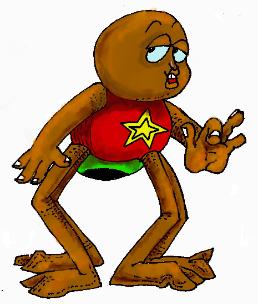
- novels: This got to represent the values, it got to be hubicated in culture. Exemples, Costa Rica there a the Limon tales of Hermano Araña o Bro Anansi, this character lives in limon, talk in this dialects, even his representation is taken from the people of Limon
- .
- Ceramic: Isn't just the form, is the way to do it. Made them is one part os the process, conserve his structure and his cultural value is very hard. A exemple is the jimenez Deredia work, the faces of his sculture conserve the costa rican features
- .

- Music: Called the typical music, we can recognize by the used of instruments, and the colors in them.


martes, 17 de septiembre de 2013
Lenguage
LANGUAGE
The RAE ( Real Spanish Academy his acronym in spanish) online dictionary give 7 definitions about lenguage, a quote literally:
Language:
- Words set use to express feelings and thought.
- Vocals system comunication.
- A way to express himself
- style and manner to talk and write from every person paticullar.
- The speech and it faculty
- Signals set with meaning.
- Set of signs and rules that allows the meaning.
The chapter is about the conection between the lenguage and the culture, the previous definition can show the lenguage is a complete follow from culture, as we can read, the use of lenguage doesn't need academy knowledge because, because the this come from the need of comunication
LANGUAGE AND CULTURE
The culture is a alive way of socialization, beacuse the fact is the persons have the culture inside them, this affect every single way in his way of life, in the way to talk, the text made a reference as lenguage as a culture window, we don't know, or feel how our words or our way to say the things, have been evolving, or how we can't change our lenguage, we can't see this with our use of the spanish words for "you" Tu and Usted, been the second the one accepted in our culture as the "normal"
The elements of culture, products and practice, I see them, in this specif case, as theis are parrarels, the products has a point of origin, a some kind of comprenssion in the practice, as I hear once upon a time, about the horses, "You can meet all about your horse, his wight, his force, the dynamics of their steps, even you could be ride another horse before, but is only up your take it, and his force has made you fall in down. in mind and body, when you really are ready for star to learn again"
In the perspective, "Thanks of God" or made the cross sing, are two good examples, about our beliefs, and our expressions, the use of them in a big group of the society, made a visible expression of our culture.
The communities, we can made a lot of communities, joined by the lenguage, but separeted by the culture, and virce versa, just a couple of facts accepted in a gruops of persons can development a collective assertive state.
And about the persons in the culture and his lenguage, every person is a world, so we would need a universal visa to understood, the lenguage, and culture for every single person. The text, the audios, are good to learn the What the people said? but to learn Why the people said that? Will be a big challenge.
LANGUAGE TO LEARN CULTURE
When we have the learning idiom in a advance level, we have all the things that books and the interactive material can give us, now is time to face the challenge to do it work, How? taking risks, pushing us to face new challenge, talk faster, think faster, but specially, learn doing, learning to knowing.
Knowing how
Participation
· Meet
· Talk
· Looking
Knowing why
Interpretation
· Deduction
· Analysis
· Congnitive funtions
Knowing about
Description
· Knowledge
· Comprehension
· Description
Knowing oneself
Response
· Evaluation
· Expressing emotions
· Inquering
domingo, 15 de septiembre de 2013
Chapter 3
What is culture?
In all kind of human civilization, there is the need to expressed the ideas, from the people as one and as a group.
The culture or the investigation of it, is about facts, and how they are share in a space. The book study in our class, present a theory about the FIVE DIMENSIONS OF CULTURE, these is about the ways of life, and how the croosover between some facts, they could give us a interpretation about the culture.
- Products: A human socialization, produces results, What is mean? If there are physical resources, as humans and place, those facts, got to show a effect, the use or the waste, are a inevitable result.
- Practices: the importantest of these fact, is to generate a state of "normality", with the used of elements in a social group, as exemple, a group of people whoes lives in a place surrounded by water, would made practices based in that physical fact.
- Perspectives: The knowlege about what are the elements around them, the elements that aren't a material manifestation, but that had been established, in the mental life.
- Communities: About these fact, we have a lot of practical exemples, beacause is they represent and are the product of the previous facts, are also a bridge between the individual and the social group.
- Persons; The source of the culture, is in the persons, his habilities, ideas, and evolution, the way of culture can exist, because need the person the exposed, in a some way, culture in product to the person.
CULTURE AS A ICEBERG
Communities, products, practices and persons, are the most visibles facts of culture, the perspectives aren't as visuals, actually they need more information and analisis, if we want to understand them better, but if we have the four other facts, the perspective will be out in our investigation.
We could use the facts that we know, and watch, as a a first look, to our identification of the culture, that we know as "new", but is not about what we watch? Also, What we don't watch?
Who is there? Who isn't there?
A good answer is the result from a good question.
ME KNOWING A NEW CULTURE
Even I never have been in another country, I Had a culture shock, in my fisrt year of university, I had choose a university, (the product) there was a good environment, the materials elements and the educational ideas, was good, so the product was atractive.
Practices, I had come from the public high school education, also I was worker class, in that time I never had had a cell phone, so I was surrounded by difents practices, as took one class a day, with a lot of materials, and requirements of time and resources, also the practice of the oneself responsability was shocking.
Communities: Myself was involved in the community of my carrer, I understood these better to taking class with people from other carrers, our needs usually wasn't the same. So made a estrategical community was necesary.
Persons: Be involved with people, and hadn't the contance schedule, hadn't the groups, made found the people with the support to found a way to the culture.
Perspectives: the curriculum, the self ideas, and the ways to improve our time, never was told, or discuss but as more we study more we learn that we will need more.
Suscribirse a:
Entradas (Atom)